 Image 1 of 1
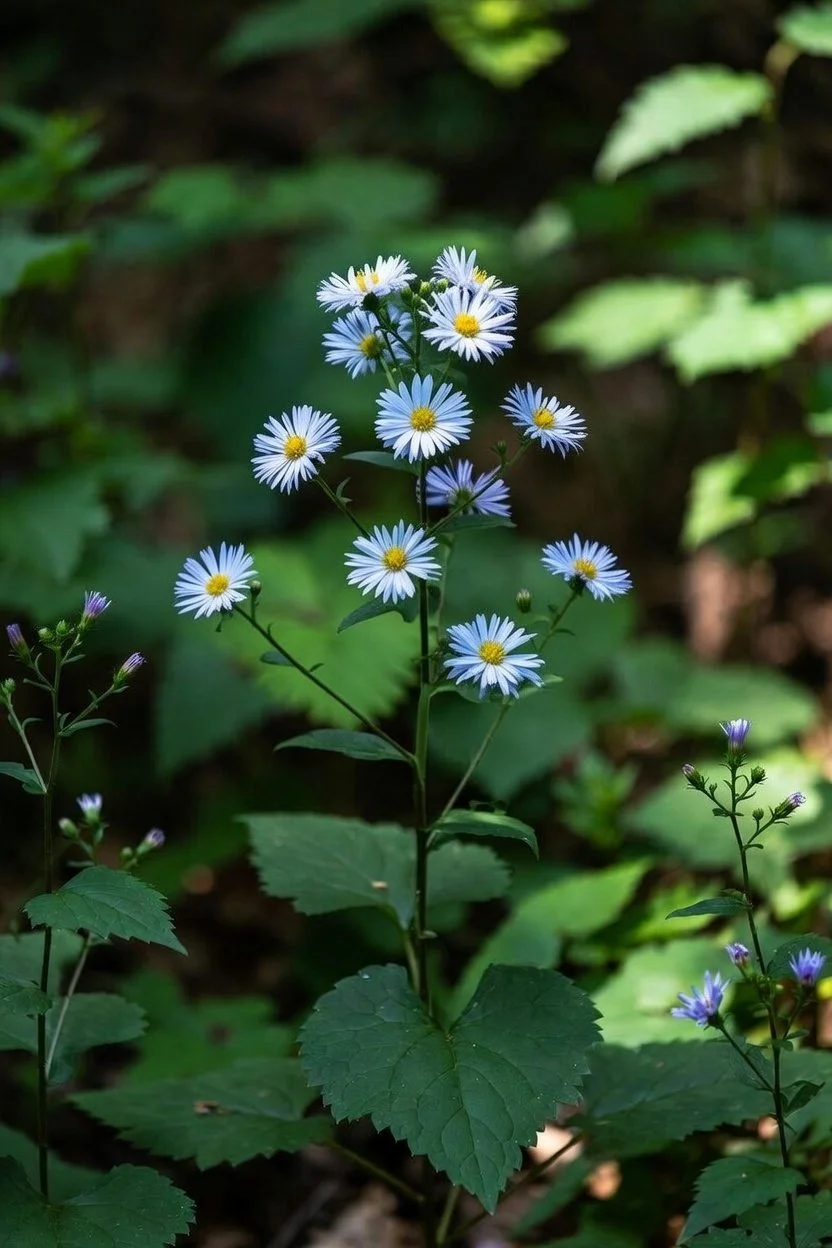
Eurybia macrophylla, commonly known as big-leaf aster or large-leaved aster (formerly Aster macrophyllus), is a native North American perennial wildflower renowned for its striking, large, heart-shaped basal leaves that are coarsely toothed, rough-textured, and can reach 4-8 inches wide, forming an attractive groundcover in shaded areas. It produces branching, flat-topped clusters of daisy-like flowers with narrow ray florets in pale blue, violet, lavender, or sometimes white tones surrounding vibrant yellow central disks. Blooming from late summer into fall (typically August to October), these delicate blossoms attract butterflies and other pollinators while adding subtle color to woodland settings. This rhizomatous species spreads to form dense colonies, with upper stem leaves much smaller and ovate, often on purplish stems. It thrives in part to full shade in moist to dry forests, woodland edges, and rich soils, making it an excellent choice for native shade gardens, groundcover in naturalistic plantings, and supporting wildlife habitat.
ORIGIN - NC native
EXPOSURE PREFERENCE - Shade, tolerates am sun
FLOWER COLOR - pale blue
HEIGHT - 24-48"
HABIT - deciduous
MOISTURE - drought tolerant
HARDINESS ZONES - 3-8
Eurybia macrophylla, commonly known as big-leaf aster or large-leaved aster (formerly Aster macrophyllus), is a native North American perennial wildflower renowned for its striking, large, heart-shaped basal leaves that are coarsely toothed, rough-textured, and can reach 4-8 inches wide, forming an attractive groundcover in shaded areas. It produces branching, flat-topped clusters of daisy-like flowers with narrow ray florets in pale blue, violet, lavender, or sometimes white tones surrounding vibrant yellow central disks. Blooming from late summer into fall (typically August to October), these delicate blossoms attract butterflies and other pollinators while adding subtle color to woodland settings. This rhizomatous species spreads to form dense colonies, with upper stem leaves much smaller and ovate, often on purplish stems. It thrives in part to full shade in moist to dry forests, woodland edges, and rich soils, making it an excellent choice for native shade gardens, groundcover in naturalistic plantings, and supporting wildlife habitat.
ORIGIN - NC native
EXPOSURE PREFERENCE - Shade, tolerates am sun
FLOWER COLOR - pale blue
HEIGHT - 24-48"
HABIT - deciduous
MOISTURE - drought tolerant
HARDINESS ZONES - 3-8