 Image 1 of 1
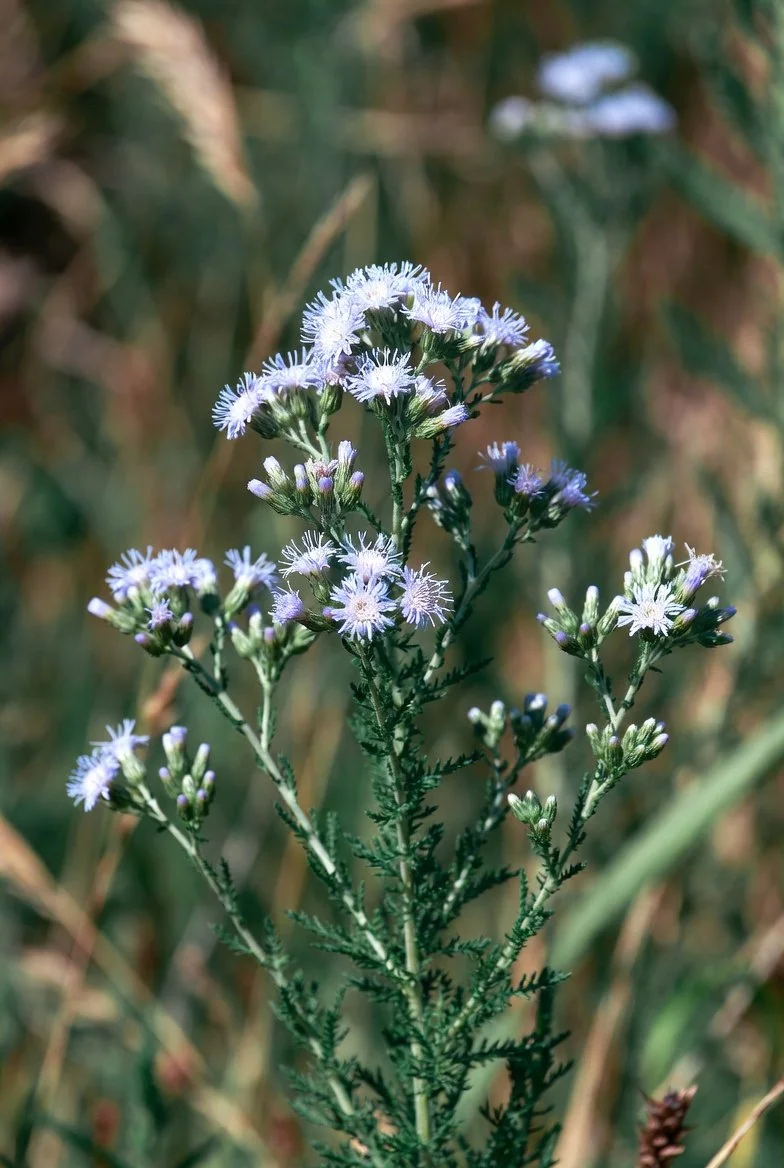
Symphyotrichum ericoides, commonly known as heath aster or white heath aster (formerly Aster ericoides), is a native North American perennial wildflower that forms a bushy, compact, multi-branched habit with wiry stems covered in small, narrow, needle-like to linear leaves that are sessile, often slightly hairy or rough-textured, and give the plant a fine, heath-like appearance. It produces an abundance of small, daisy-like flower heads about 1/3 to 1/2 inch across, featuring 8–20 white ray florets (rarely pinkish) surrounding a compact yellow disk that ages to reddish, creating a profuse, snow-like cloud of blooms from late summer through fall (typically August to October). The flowers are densely clustered along the upper stems and branches, providing a billowing, frothy display that attracts butterflies, bees, and other pollinators while offering late-season nectar. This rhizomatous species spreads readily by roots and self-seeding, thriving in full sun to part shade and dry to medium, well-drained soils including sandy, rocky, or poor conditions, and is commonly found in prairies, savannas, roadsides, woodland edges, and disturbed sites. It is a valuable addition to native gardens, meadows, or wildflower borders for its drought tolerance, low maintenance, erosion control, and ability to create airy, textural interest amid warm-season grasses.
ORIGIN - Mid-west/Northeast US Native cv.
EXPOSURE PREFERENCE - Full sun, tolerates am shade
FLOWER COLOR - white w/yellow center
HEIGHT - 24-36
HABIT - deciduous
MOISTURE - moist/well drained
HARDINESS ZONES - 3-8
Symphyotrichum ericoides, commonly known as heath aster or white heath aster (formerly Aster ericoides), is a native North American perennial wildflower that forms a bushy, compact, multi-branched habit with wiry stems covered in small, narrow, needle-like to linear leaves that are sessile, often slightly hairy or rough-textured, and give the plant a fine, heath-like appearance. It produces an abundance of small, daisy-like flower heads about 1/3 to 1/2 inch across, featuring 8–20 white ray florets (rarely pinkish) surrounding a compact yellow disk that ages to reddish, creating a profuse, snow-like cloud of blooms from late summer through fall (typically August to October). The flowers are densely clustered along the upper stems and branches, providing a billowing, frothy display that attracts butterflies, bees, and other pollinators while offering late-season nectar. This rhizomatous species spreads readily by roots and self-seeding, thriving in full sun to part shade and dry to medium, well-drained soils including sandy, rocky, or poor conditions, and is commonly found in prairies, savannas, roadsides, woodland edges, and disturbed sites. It is a valuable addition to native gardens, meadows, or wildflower borders for its drought tolerance, low maintenance, erosion control, and ability to create airy, textural interest amid warm-season grasses.
ORIGIN - Mid-west/Northeast US Native cv.
EXPOSURE PREFERENCE - Full sun, tolerates am shade
FLOWER COLOR - white w/yellow center
HEIGHT - 24-36
HABIT - deciduous
MOISTURE - moist/well drained
HARDINESS ZONES - 3-8