 Image 1 of 1
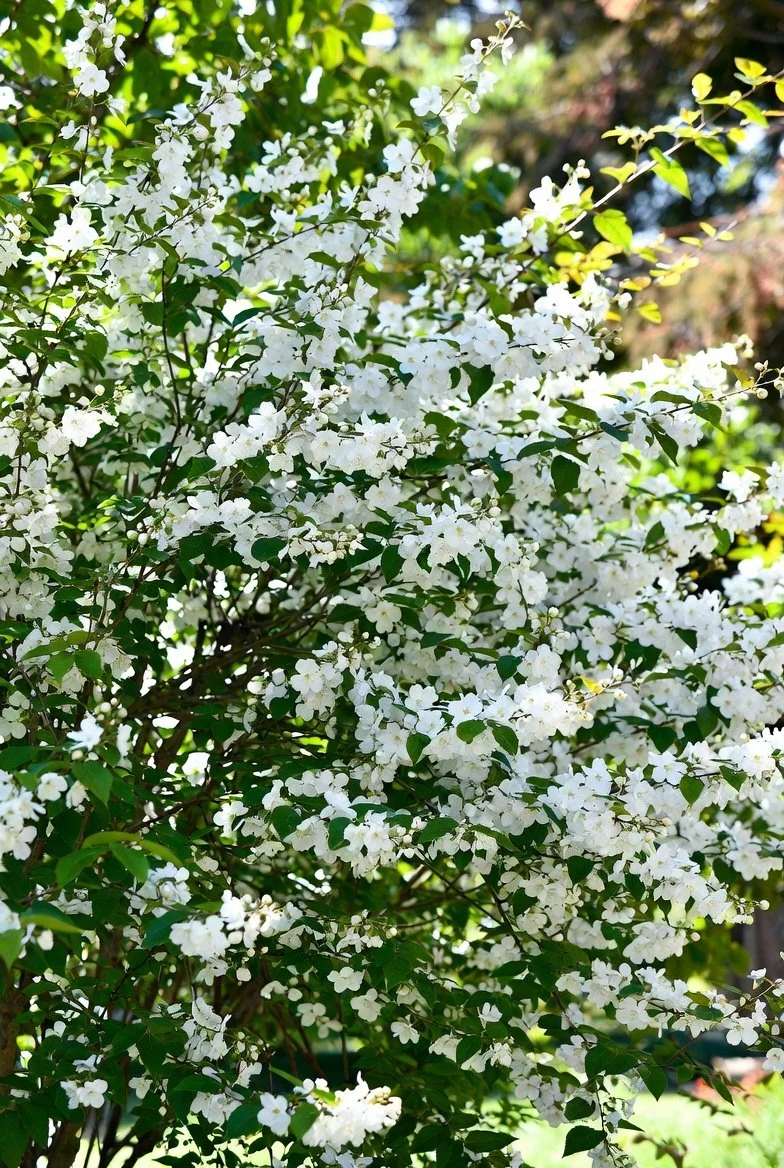
Philadelphus, commonly known as mock orange, is a genus of deciduous shrubs in the Hydrangeaceae family, featuring graceful, arching branches with opposite, simple, oval to lance-shaped leaves that are typically dark green, serrated along the edges, and provide a lush backdrop. In late spring to early summer (typically May to June), it bursts into profuse bloom with clusters of showy, cup-shaped or cross-like white flowers, usually with four petals and prominent golden-yellow stamens, emitting a strong, sweet fragrance reminiscent of orange blossoms or jasmine that fills the air. The blooms are often single but some cultivars feature double flowers, attracting pollinators such as bees and butterflies while the plant itself remains relatively unremarkable outside of flowering season, with peeling reddish-brown bark on older stems adding subtle winter interest. This adaptable shrub thrives in full sun to partial shade and well-drained soils ranging from average to moist, tolerating drought, wind, and a variety of conditions once established, though it prefers organically rich sites for optimal performance. Mock orange makes an excellent choice for mixed borders, hedges, screens, foundation plantings, or near patios and doorways to enjoy its intoxicating scent, with low-maintenance needs, deer resistance in many cases, and value in naturalistic or cottage-style gardens.
ORIGIN - NC Native
EXPOSURE PREFERENCE - Full sun, tolerates am shade
FLOWER COLOR - white
HEIGHT - 6-10 ft
HABIT - deciduous
MOISTURE - moist/well drained
HARDINESS ZONES - 5-10
Philadelphus, commonly known as mock orange, is a genus of deciduous shrubs in the Hydrangeaceae family, featuring graceful, arching branches with opposite, simple, oval to lance-shaped leaves that are typically dark green, serrated along the edges, and provide a lush backdrop. In late spring to early summer (typically May to June), it bursts into profuse bloom with clusters of showy, cup-shaped or cross-like white flowers, usually with four petals and prominent golden-yellow stamens, emitting a strong, sweet fragrance reminiscent of orange blossoms or jasmine that fills the air. The blooms are often single but some cultivars feature double flowers, attracting pollinators such as bees and butterflies while the plant itself remains relatively unremarkable outside of flowering season, with peeling reddish-brown bark on older stems adding subtle winter interest. This adaptable shrub thrives in full sun to partial shade and well-drained soils ranging from average to moist, tolerating drought, wind, and a variety of conditions once established, though it prefers organically rich sites for optimal performance. Mock orange makes an excellent choice for mixed borders, hedges, screens, foundation plantings, or near patios and doorways to enjoy its intoxicating scent, with low-maintenance needs, deer resistance in many cases, and value in naturalistic or cottage-style gardens.
ORIGIN - NC Native
EXPOSURE PREFERENCE - Full sun, tolerates am shade
FLOWER COLOR - white
HEIGHT - 6-10 ft
HABIT - deciduous
MOISTURE - moist/well drained
HARDINESS ZONES - 5-10