 Image 1 of 1
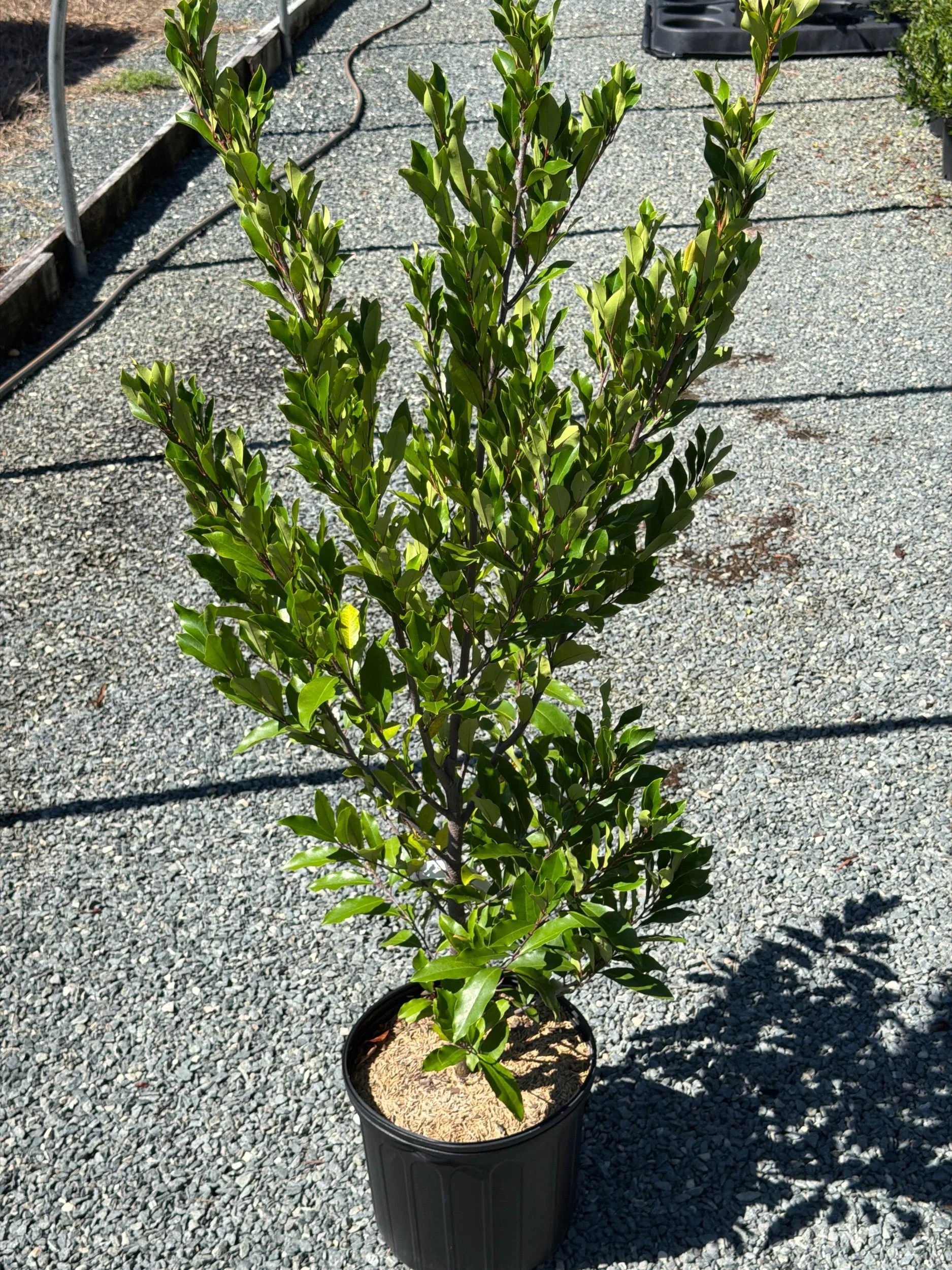
Prunus caroliniana, commonly known as Carolina cherry laurel, is a fast-growing, broadleaf evergreen shrub or small tree native to the southeastern United States, widely used for dense screening, hedging, and foundation plantings. It features glossy, dark green, lance-shaped leaves with smooth or slightly wavy margins that emerge bronze-red in spring before maturing to a rich, leathery green, providing excellent year-round foliage color and structure. In early spring, it produces short racemes of small, creamy-white, fragrant flowers that attract pollinators and create a subtle, sweet scent in the garden. These blooms are followed by clusters of shiny black, cherry-like drupes in late summer to fall, which persist into winter and serve as food for birds (though all parts of the plant are toxic to humans and pets if ingested due to cyanogenic compounds). This adaptable species thrives in full sun to partial shade with well-drained soils, tolerating heat, drought, humidity, and occasional pruning, making it a reliable, low-maintenance choice for landscapes
ORIGIN - NC Native
EXPOSURE PREFERENCE - Full sun, tolerates am shade
FLOWER COLOR - white
HEIGHT - 15-30 ft
HABIT - evergreen
MOISTURE - moist/well drained
HARDINESS ZONES - 7-10
Prunus caroliniana, commonly known as Carolina cherry laurel, is a fast-growing, broadleaf evergreen shrub or small tree native to the southeastern United States, widely used for dense screening, hedging, and foundation plantings. It features glossy, dark green, lance-shaped leaves with smooth or slightly wavy margins that emerge bronze-red in spring before maturing to a rich, leathery green, providing excellent year-round foliage color and structure. In early spring, it produces short racemes of small, creamy-white, fragrant flowers that attract pollinators and create a subtle, sweet scent in the garden. These blooms are followed by clusters of shiny black, cherry-like drupes in late summer to fall, which persist into winter and serve as food for birds (though all parts of the plant are toxic to humans and pets if ingested due to cyanogenic compounds). This adaptable species thrives in full sun to partial shade with well-drained soils, tolerating heat, drought, humidity, and occasional pruning, making it a reliable, low-maintenance choice for landscapes
ORIGIN - NC Native
EXPOSURE PREFERENCE - Full sun, tolerates am shade
FLOWER COLOR - white
HEIGHT - 15-30 ft
HABIT - evergreen
MOISTURE - moist/well drained
HARDINESS ZONES - 7-10